Recovery isn’t just about stopping a behavior—it’s about learning new ways to respond when life becomes difficult.
Stress, anxiety, relationship conflict, and overwhelming emotions don’t disappear simply because someone decides to make a change. That’s where Dialectical Behavior Therapy (DBT) can make a meaningful difference.
Originally developed by psychologist Marsha M. Linehan, DBT teaches practical skills that help people regulate emotions, tolerate distress, improve relationships, and stay present in the moment. These skills are now used in mental health treatment, addiction recovery, trauma therapy, and everyday stress management.
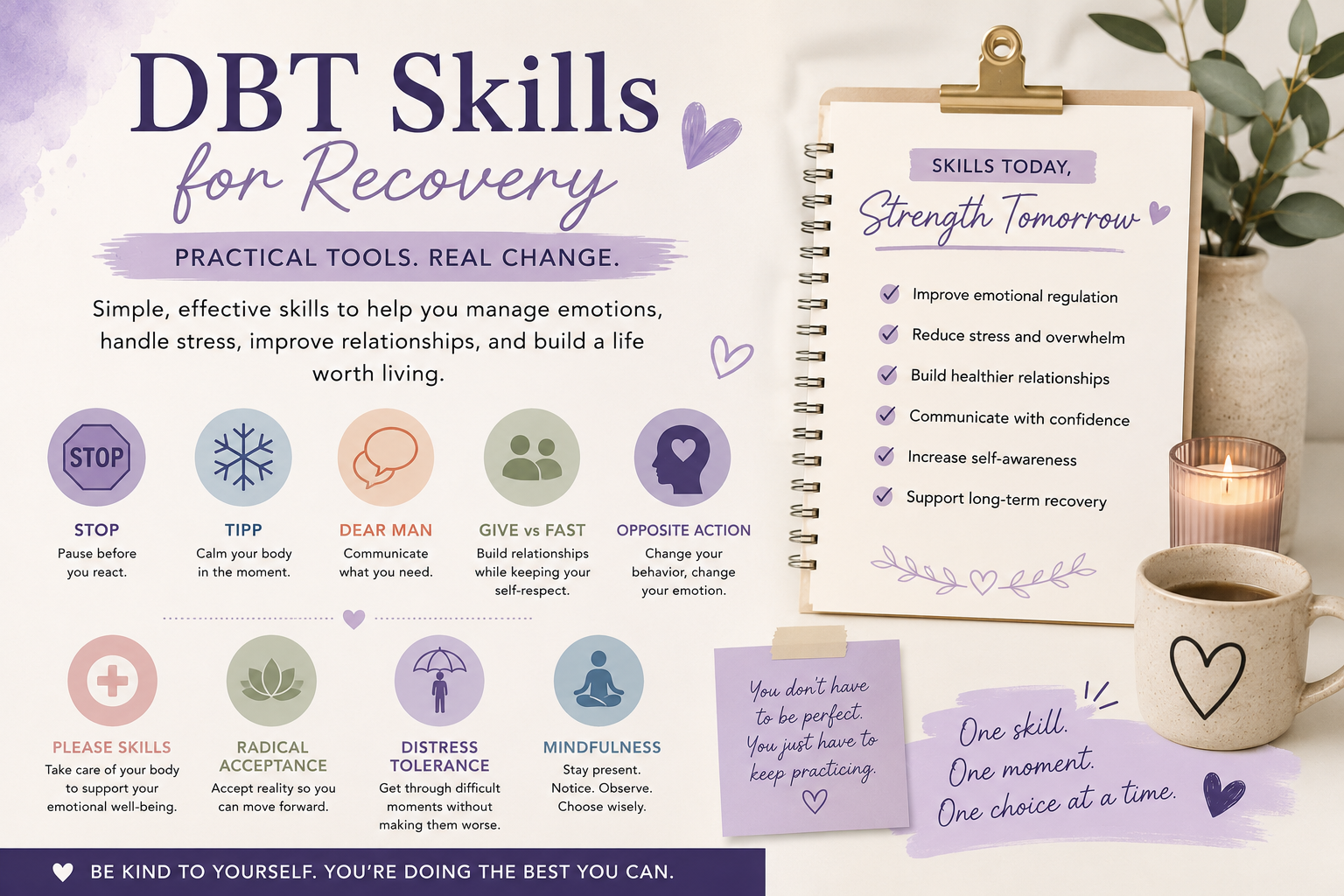
STOP: Pause Before You React
Create space between an emotion and an action.
S — Stop: Pause before saying or doing anything.
T — Take a Step Back: Take a deep breath or physically step away if possible.
O — Observe: Notice what you’re thinking, feeling, and experiencing without immediately acting.
P — Proceed Mindfully: Choose the response that aligns with your long-term goals.
Example: You receive a text that feels hurtful. Instead of firing back an angry response, you pause, breathe, and give yourself time to think. Later, you respond calmly rather than react emotionally.
Even a brief pause can prevent conflict and help you make decisions you’ll feel better about later.
TIPP: Calm Your Body During Emotional Crisis
Help your body settle so your mind can catch up.
Temperature: Splash cool water on your face or hold a wrapped cold pack against your cheeks.
Intense Exercise: Move your body briefly by walking briskly, climbing stairs, or doing jumping jacks when medically appropriate.
Paced Breathing: Slow your breathing, allowing your exhale to last longer than your inhale.
Progressive Muscle Relaxation: Gently tense and release muscle groups from head to toe.
These strategies can help lower the intensity of the moment, making it easier to think clearly and respond intentionally.
DEAR MAN: Ask for What You Need
Communicate assertively while respecting yourself and others.
- D – Describe the situation using facts.
- E – Express your feelings using “I” statements.
- A – Assert what you need.
- R – Reinforce why meeting your request would be helpful.
- M – Stay Mindful of your goal.
- A – Appear Confident through your tone and body language.
- N – Negotiate if needed.
“When meetings start late, I feel stressed because it affects my schedule. I’d appreciate starting on time whenever possible. It helps me stay organized and prepared.”
GIVE vs. FAST
Build relationships while maintaining self-respect.
GIVE
Gentle · Interested · Validate · Easy Manner
Use GIVE when your goal is strengthening a relationship through empathy, curiosity, and respect.
FAST
Fair · No unnecessary Apologies · Stick to Values · Truthful
Use FAST when your goal is maintaining your self-respect and appropriate boundaries.
Opposite Action
Change your behavior to influence the emotion.
Sometimes emotions encourage behaviors that make situations worse. Opposite Action means choosing a behavior that moves you toward your values instead of following the emotion’s first impulse.
- Feeling anxious? Instead of avoiding the situation completely, take one manageable step toward it.
- Feeling sad? Instead of isolating, reach out to someone you trust.
- Feeling angry? Instead of yelling, slow down and communicate calmly.
PLEASE Skills
Care for your body to support emotional well-being.
- Physical illness: Follow treatment recommendations and care for your health.
- Eating: Fuel your body consistently.
- Avoid mood-altering substances: Reduce things that increase emotional vulnerability.
- Sleep: Work toward a regular sleep routine when possible.
- Exercise: Move in realistic, sustainable, and medically appropriate ways.
These habits won’t eliminate difficult emotions, but they may reduce vulnerability to becoming overwhelmed.
Radical Acceptance
Let go of fighting a reality that has already occurred.
Radical Acceptance doesn’t mean approving of painful experiences or pretending everything is okay. It means acknowledging reality as it is, even when you don’t like it.
- Accepting that the past cannot be changed.
- Acknowledging difficult emotions without judging yourself for having them.
- Focusing on today’s choices rather than yesterday’s mistakes.
Distress Tolerance
Get through difficult moments without making them worse.
Distress tolerance is about navigating emotional crises safely when immediate solutions aren’t available. Helpful options can include deep breathing, grounding, healthy distraction, self-soothing, reaching out to supportive people, or practicing temporary acceptance until emotions settle.
The goal isn’t to eliminate distress instantly—it’s to move through it without creating additional problems.
Mindfulness for Recovery
Stay present, notice what is happening, and choose wisely.
Mindfulness is a foundation of DBT because it helps us notice what’s happening without immediately reacting. Practicing mindfulness can help you recognize triggers earlier, increase self-awareness, reduce automatic reactions, improve decision-making, and stay connected to recovery goals.
Start simply: focus on your breathing, notice physical sensations, observe thoughts without judging them, or fully engage in one activity at a time.
Skills Today, Strength Tomorrow
Learning DBT skills is a process, not a one-time event. Like any new skill, they become more effective with practice and repetition. You don’t have to master every technique at once. Start with one skill that feels relevant to your current challenges and practice it consistently.
Small changes, repeated over time, can support meaningful improvements in emotional regulation, relationships, and recovery.
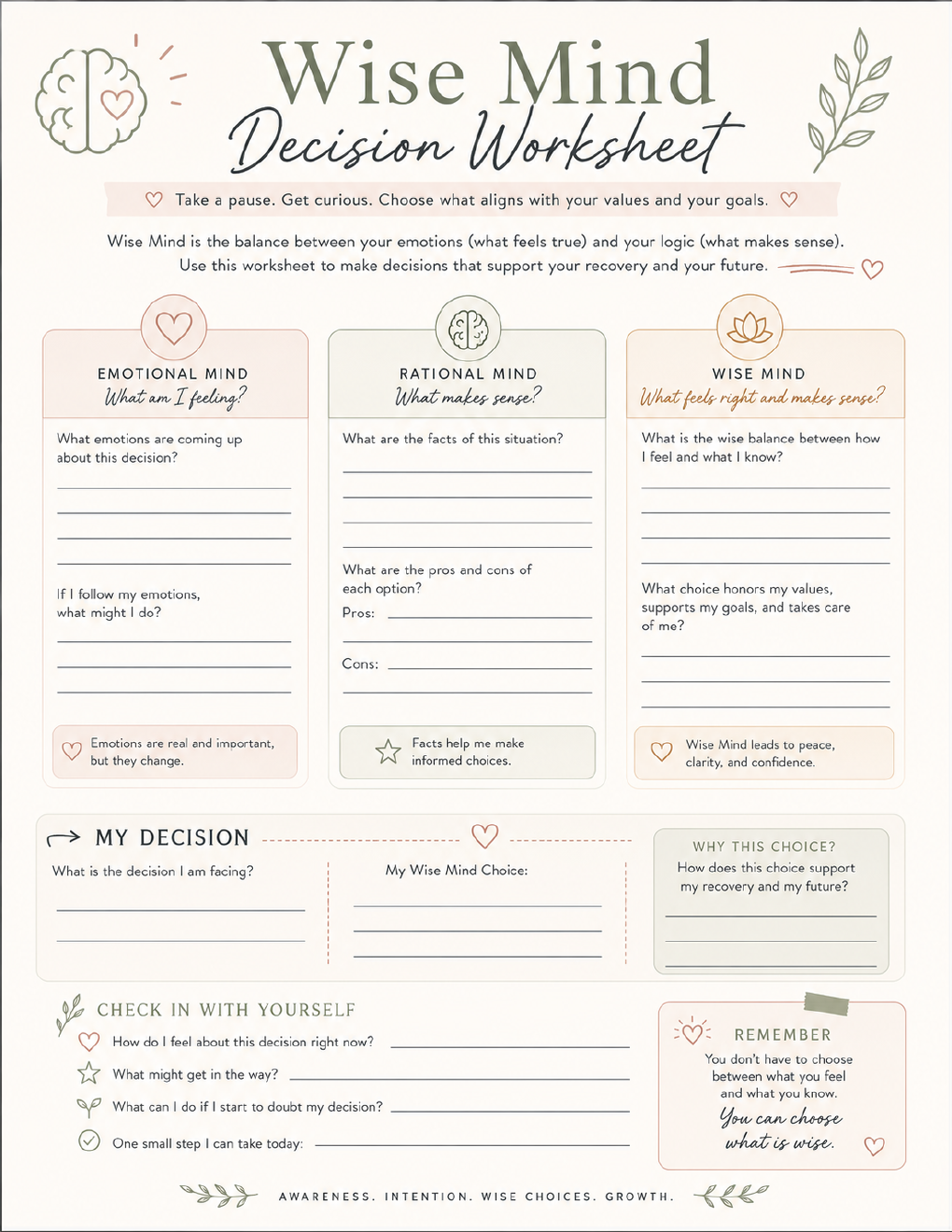
Practice with Wise Mind
Use this free worksheet to balance emotion and logic and identify your next wise step.
Download the worksheet