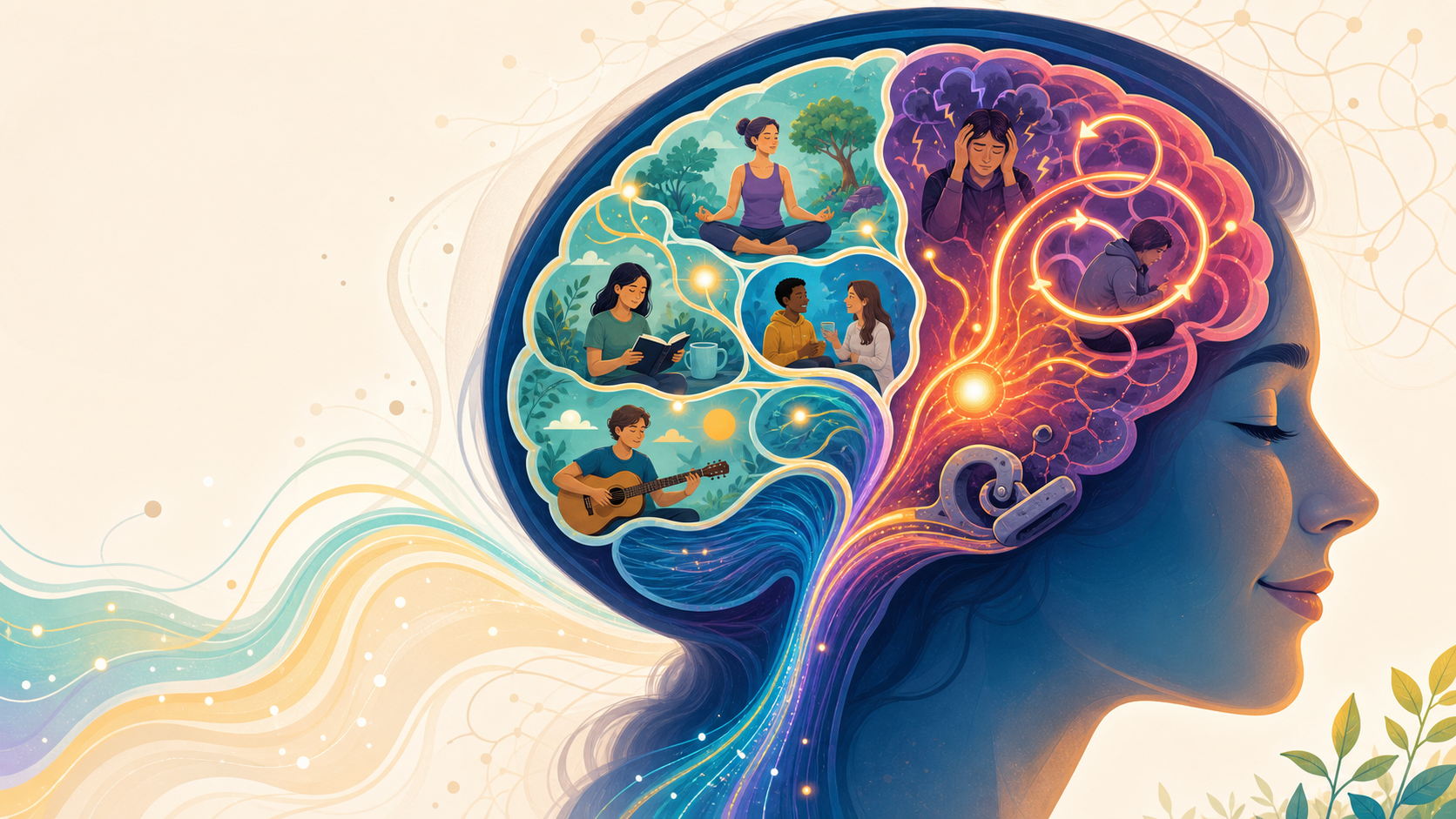
Picture your brain as the world’s most complicated control room. It manages your thoughts, decisions, emotions, memories, habits, and even your sudden desire for a snack at 10 p.m.
Normally, the control room runs fairly smoothly. But addiction can begin changing the settings—especially the ones connected to reward, stress, habits, and self-control. Eventually, something that once felt optional can start feeling extremely difficult to resist.
So, what is actually happening up there?
First, Meet Dopamine—the Brain’s Motivational Messenger
Dopamine is often called the brain’s “feel-good chemical,” but that description is a little too simple. Dopamine is also involved in motivation, learning, and helping your brain remember what might be worth doing again.
When you eat something delicious, laugh with friends, exercise, or accomplish a goal, your brain’s reward system takes note:
“Hey, that was helpful or enjoyable. Let’s remember it.”
Many addictive substances create unusually strong or fast activity within this reward system. The details differ depending on the substance, but the message received by the brain can be especially powerful:
“Whoa. This is important. Pay attention—and remember how to find it again.”
With repetition, the brain begins connecting the substance with the people, places, feelings, and situations surrounding it. A certain street, song, smell, stressful day, or group of friends can become a trigger—even when the person was not consciously thinking about using.
That is one reason cravings can seem to appear out of nowhere. The brain noticed the cue before the person had time to think it through.
The Brain Starts Adjusting the Volume
Your brain is constantly trying to maintain balance. If it repeatedly receives an intense chemical signal, it may respond by turning down its sensitivity.
Think of walking into a room with loud music. At first, the music feels overwhelming. After a while, your brain adjusts, and it does not seem quite as loud.
Something similar can happen with repeated substance use. The same amount may no longer produce the same effect, which is known as tolerance. A person may use more—or use more often—trying to recreate the original experience.
At the same time, everyday rewards may begin feeling less satisfying. Food, hobbies, relationships, and other activities that once felt enjoyable can seem strangely dull.
It is not necessarily that the person stopped caring. Their reward system has adapted, and ordinary life is now competing with a much stronger signal.
A Choice Can Slowly Become a Habit
The brain loves habits because habits save energy. You probably do not carefully analyze every step involved in brushing your teeth or driving a familiar route. Your brain places repeated actions on something like autopilot.
Unfortunately, it can do the same thing with substance use.
As a behavior is repeated, control can shift away from deliberate decision-making and toward the brain systems responsible for habits and routines. The behavior becomes faster, more automatic, and harder to interrupt.
The more often that route is traveled, the easier it becomes to follow. Meanwhile, healthier paths—calling someone, exercising, resting, or asking for help—may become less familiar.
This does not mean the old route can never change. It means that building a new one usually requires time, repetition, and support.
Meanwhile, the Brain’s Brakes Get Weaker
The prefrontal cortex, located near the front of the brain, helps with judgment, planning, impulse control, and thinking about future consequences. It is basically the responsible friend who says, “Maybe we should think this through.”
Addiction can interfere with this system. At the same time, the brain circuits shouting, “We need this right now!” may become louder.
Imagine driving a car with an accelerator that has become extra sensitive and brakes that are not working as well as they used to. The driver can still see the stop sign. They may genuinely want to stop. But doing so has become much harder.
This helps explain why someone may continue using a substance even while recognizing the damage it is causing. Addiction is not simply a lack of information, intelligence, love, or willpower. It is a treatable medical condition involving brain circuits, genetics, environment, and life experiences.
Eventually, “Feeling Good” Can Become “Avoiding Feeling Bad”
Early on, a person may use a substance because it creates pleasure, confidence, energy, calm, or escape. With ongoing addiction, the motivation can change.
When the substance wears off, the brain’s reward activity may drop while its stress systems become more active. The person might experience anxiety, irritability, sadness, restlessness, physical discomfort, or sleep problems.
Now the substance may be used less to feel amazing and more to feel normal—or simply to stop feeling terrible.
Researchers often describe addiction as a repeating cycle:
- Reward: The substance produces pleasure or relief.
- Withdrawal or distress: The effect fades, and negative feelings increase.
- Craving: Triggers, stress, or memories create a strong urge to use again.
The National Institute on Alcohol Abuse and Alcoholism explains that this cycle involves the brain’s reward, stress, habit, and decision-making systems. Although substances affect the brain in different ways, this general pattern helps explain why addiction can become so persistent.
So, Is the Brain Permanently Broken?
No—and this is the hopeful part.
The brain has neuroplasticity, which is its ability to change and reorganize itself. That ability helps addiction develop, but it also helps recovery happen.
When substance use stops or decreases, the brain can begin adjusting again. Reward and stress systems may gradually stabilize. Decision-making can improve. New routines can become more automatic, and triggers can become easier to manage.
Recovery is not always quick or perfectly straight. The brain may need months—or longer—to heal and build new patterns. A return to use does not mean that treatment has failed or that someone is back at the beginning. It usually means the recovery plan needs more support or adjustment.
Depending on the substance and the person, treatment may include counseling, medication, medical care, peer support, healthier routines, and changes to the surrounding environment. There is no single “correct” path that works for everyone.
The Big Takeaway
Addiction is not a simple story about someone making bad choices.
It is a process in which the brain learns, adapts, and begins giving a substance or behavior far more importance than it should. The reward system turns up its motivational signal, habits become deeply practiced, stress increases, and the brain’s decision-making brakes may struggle to keep up.
But brains can learn new patterns, too.
With time, treatment, support, and plenty of practice, the control room can begin resetting its equipment. The process may be challenging, but recovery is real—and the brain itself is capable of helping make it possible.