
Have you ever reacted in the heat of the moment and regretted it later?
Maybe you sent an angry message, agreed to something you did not want to do, or made a decision because your emotions felt overwhelming.
The opposite can also happen. You might analyze a problem so logically that you ignore your feelings, needs, or personal values.
When emotions and logic pull us in different directions, making a healthy decision can feel almost impossible. This is where Wise Mind can help.
Understanding Wise Mind
Wise Mind is a concept taught in Dialectical Behavior Therapy (DBT). It describes a balanced state in which we use both emotional awareness and logical thinking to guide our choices.
To understand Wise Mind, it helps to recognize three states of mind.
Emotion Mind
Emotion Mind happens when feelings control our thoughts and actions.
In Emotion Mind, you might think:
- “I feel rejected, so nobody cares about me.”
- “I’m angry, so I need to respond right now.”
- “I’m afraid, so this situation must be dangerous.”
Emotions are important. They help us recognize needs, threats, boundaries, and meaningful experiences. However, acting entirely from Emotion Mind can lead to impulsive decisions.
Reasonable Mind
Reasonable Mind focuses on facts, logic, planning, and problem-solving.
In Reasonable Mind, you might ignore your emotional needs because they seem inconvenient or irrational. You may choose what looks best on paper without considering whether it fits your values or supports your well-being.
Reasonable Mind is useful, but logic alone does not always provide the complete answer.
Wise Mind
Wise Mind is the meeting point between Emotion Mind and Reasonable Mind.
It asks:
- What are the facts?
- What am I feeling?
- What is this emotion trying to tell me?
- What matters most in this situation?
- Which response will support me in the long term?
Wise Mind does not eliminate emotion. It allows you to feel your emotions without letting them make every decision.
What Wise Mind Can Sound Like
Imagine receiving criticism at work.
Emotion Mind: “I’m a failure. I need to defend myself.”
Reasonable Mind: “Feedback is only information. My feelings do not matter.”
Wise Mind: “This feedback hurts, and I need time to process it. Some of it may be useful. I can ask questions and decide what changes will help me grow.”
Wise Mind respects the emotion while also considering the facts.
Practical Tips for Accessing Wise Mind
1. Pause before responding
Strong emotions often create a false sense of urgency. Before taking action, pause and take several slow breaths. If possible, wait before sending a message, making a purchase, or making an irreversible decision.
2. Name what you are feeling
Put the emotion into words: “I feel angry,” “I feel embarrassed,” “I feel afraid of being rejected,” or “I feel overwhelmed.” Naming an emotion can help you observe it instead of automatically reacting to it.
3. Check the facts
Separate what you know from what you are assuming.
Fact: Someone has not replied to my message.
Assumption: They are ignoring me because they do not care.
Ask yourself whether there are other possible explanations.
4. Listen for the need beneath the emotion
Emotions often carry useful information. Anger may point to a crossed boundary. Sadness may reflect a loss. Anxiety may signal uncertainty or a need for preparation.
You do not have to follow every impulse, but you can still listen to what the emotion is communicating.
5. Think beyond immediate relief
Ask yourself:
- What response will I feel good about tomorrow?
- Does this choice match my values?
- Will this action improve the situation or make it harder?
- What would I advise someone I care about to do?
6. Start with the next wise step
You do not need to solve everything at once. Your next Wise Mind step might be taking a break, gathering more information, setting a boundary, asking for help, or waiting until you feel more settled.
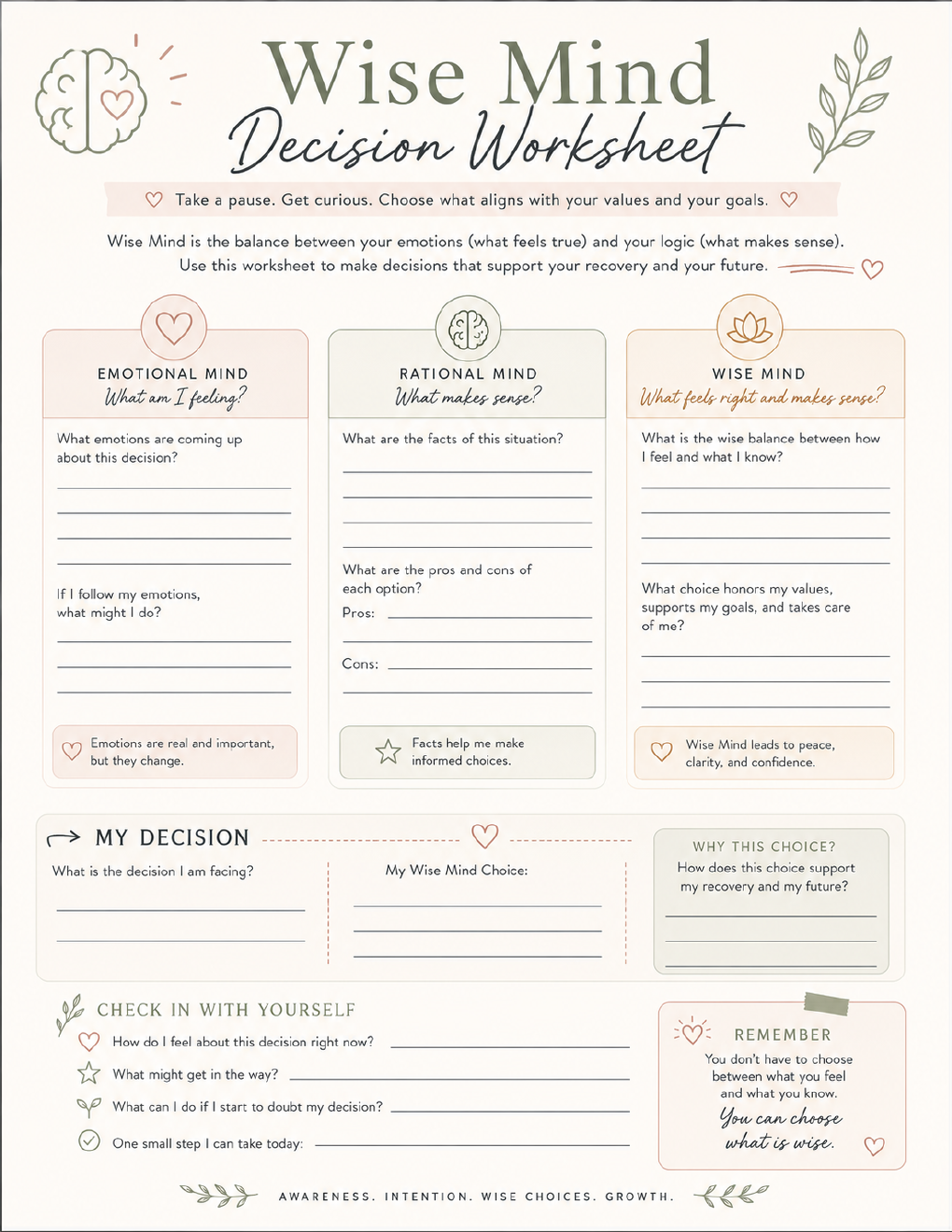
Wise Mind Decision Worksheet
Use this worksheet when you feel stuck between emotion and logic. Work through the situation, feelings, facts, values, possible consequences, and your next wise step.
Download the worksheet